
Have you ever found yourself hiding your smile in a family photo or passing on a steak dinner because your teeth just aren’t up to the task? You aren’t alone. In fact, roughly 178 million Americans are missing at least one tooth, and about 40 million are missing all of their teeth.
The good news? We’ve moved far beyond the days of “teeth in a jar” on the nightstand. Modern dentistry offers solutions that look, feel, and function like the real thing. But now you’re facing a fork in the road: do you replace teeth one by one, or do you go for the “Full Monty” with All-on-4? It’s a big decision with long-term consequences for your wallet and your jawline. Let’s break down the data so you can choose the path that gets you back to smiling (and eating) with confidence.
What Are These Implant Options?
Before we dive into the nitty-gritty, let’s define our terms.
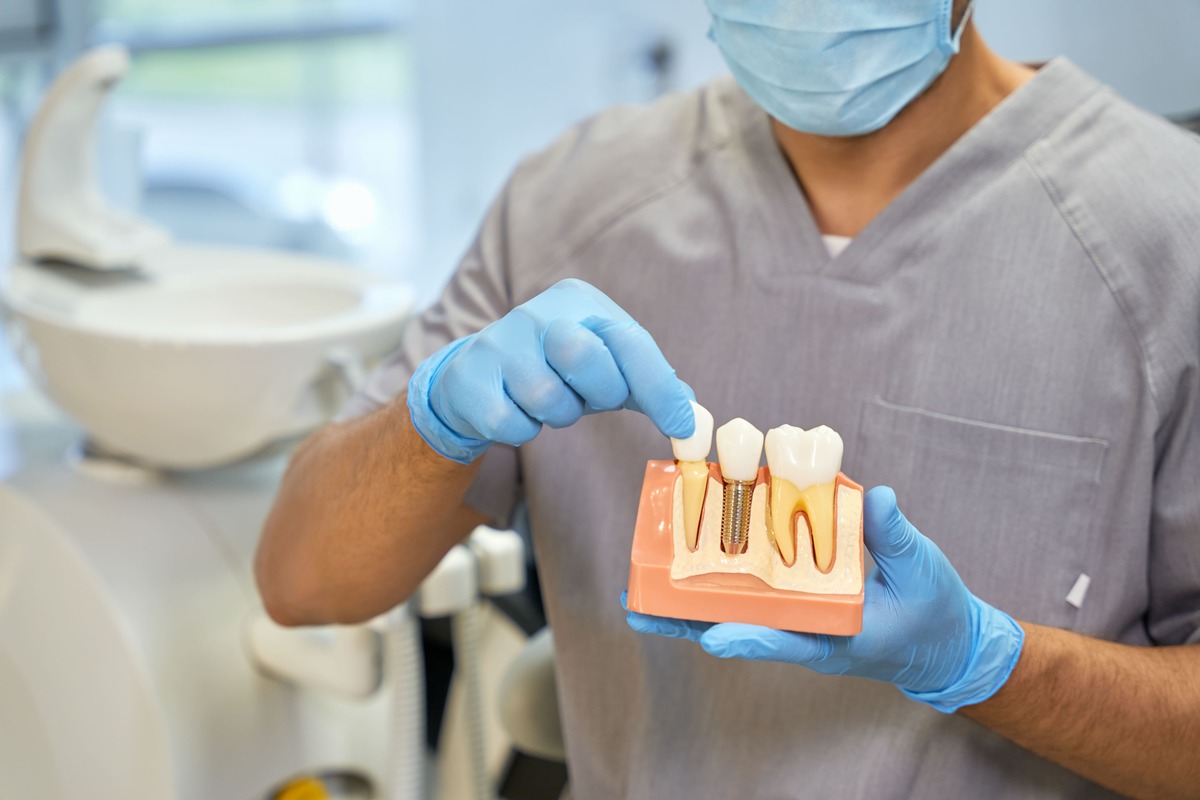
- Single Tooth Implants: These are the “one-for-one” replacement. A titanium post acts as a root, topped with a custom porcelain crown.
- All-on-4 Dental Implants: a full-arch restoration. Using just four strategically placed titanium implants, a dentist can support an entire bridge of teeth (upper or lower).
How Likely Are They to Work?
One of the most important questions: Which solution lasts longer and performs better?
Single Tooth Implant Success
Single-tooth implants are among the most predictable dental treatments available. Studies report 95‑- 98% success rates over 10 years, with many lasting decades when properly maintained.
A landmark long-term follow-up found that the implant itself had a 95.6% survival rate even after 38–40 years, although the crown on top might need to be replaced sooner.
All‑on‑4 Success Rates
All-on-4 implants also have a high overall success rate. Multiple clinical studies report survival rates of 95–98% over 5–13 years, and in some studies, up to 99.2% prosthetic success at 10 years.
Importantly, success depends greatly on surgical skill, patient health status (such as smoking or diabetes), and post-placement hygiene habits.
Verdict: Both solutions have excellent success rates, with individuals achieving strong long-term outcomes when guided by skilled providers and receiving good home care.
Pros & Cons: All‑on‑4 vs Single Tooth Implants
Here’s a side-by-side look at the advantages and drawbacks of these two popular implant strategies.
Single Tooth Implants – Pros
- Look and feel like your own tooth
- Preserve healthy bone by stimulating the jaw
- Don’t affect adjacent teeth
- Natural chewing and speech function
- Very high long-term success rates
Single Tooth Implants – Cons
- Higher cost per tooth than bridges or partial dentures
- Requires surgery and healing time
- May not be practical if you have multiple missing teeth
- Bone grafting might be needed if jawbone density is low
All‑on‑4 Implants – Pros
- Efficient full‑arch replacement
- Fewer implants are required than traditional implant sets
- Rapid functional teeth placement (often in a day)
- Excellent success rates over the long term
- Can avoid bone grafting even with some bone loss
All‑on‑4 Implants – Cons
- Higher overall upfront cost
- Requires complete arch tooth extraction in most cases
- Fixed solution — you can’t replace a single tooth without replacing the whole bridge
- Cleaning can be trickier than with individual teeth
- Some speech or eating adjustment may be necessary initially
So… Which One is Right for YOU?
Best For Single Missing Teeth
If only one or two teeth are missing, and most other teeth are healthy, single-tooth implants are nearly always the better option. They preserve natural jaw structure and give you stability and aesthetics that mimic real teeth.
Best For Multiple or Full‑Arch Loss
If you’ve lost many teeth in an arch—or the costs of individual implants would be through the roof—All‑on‑4 is often the practical choice. You get a full set of fixed teeth with fewer surgeries and a predictable timeline.
Aftercare & Longevity Tips
Whatever option you choose:
- Brush and floss every day
- See your dentist regularly
- Avoid smoking
- Maintain good systemic health
All of these dramatically influence success beyond what surgery alone can achieve.
Conclusion
Both single tooth implants and All‑on‑4 dental implants are excellent ways to restore your smile—and modern dentistry has made them reliable, long-lasting, and life-changing procedures.
If you’re replacing just one tooth, single implants are likely your best bet. However, for multiple missing teeth or full‑arch restoration, All‑on‑4 provides a more efficient, cost-effective, and functional solution.
Your mouth is as unique as your fingerprint, so consulting a trusted local dentist in Chandler the U.S. (especially one experienced in advanced implant cases) is the key first step.
Remember: It’s not just about replacing teeth—it’s about restoring confidence, nutrition, and quality of life.
Frequently Asked Questions
- How long do dental implants last?
With proper care, implants can last decades or even a lifetime. Crowns may need replacement, but the titanium implant itself can be permanent.
- Does insurance cover implants?
Coverage varies. Most dental plans cover a portion of implant costs, but All-on-4 may be treated as cosmetic and subject to benefit limits. Consult your provider.
- Is the All-on-4 procedure painful?
Most patients tolerate it well with local anesthesia or sedation. Some post‑op discomfort is normal and manageable with medication.
- Can implants fail?
Yes—rarely. Poor oral hygiene, smoking, or systemic conditions can raise risk. Following the dentist’s guidance minimizes this.
- How soon can I eat after implant surgery?
Most patients wait a few weeks before eating hard foods. All‑on‑4 often allows soft foods immediately and a normal diet as healing progresses.