
If you’re exploring tooth replacement options and your dentist mentioned dental implants, you’ve probably already come across a key decision: zirconia vs titanium implants. Both are clinically proven, long-lasting solutions, but they’re not identical. The right choice depends on your health history, aesthetic goals, and individual biology.
At Riggs Family Dental, we help patients in Gilbert and Chandler, AZ navigate these decisions with honest, evidence-based guidance. Here’s what you need to know before your consultation.
What Are Dental Implants and Why Does Material Matter?
A dental implant is a small post surgically placed into the jawbone to replace a missing tooth root. Over time, it fuses with the surrounding bone through a process called osseointegration, creating a stable foundation for a crown, bridge, or denture.
The material the implant post is made from directly affects:
- How well it integrates with bone
- Its biocompatibility with your body
- The visual appearance at the gumline
- Its long-term durability under chewing forces
Both titanium and zirconia have strong clinical track records, but they perform differently in specific situations.
Titanium Implants: The Gold Standard
Titanium has been used in dental implants for over 50 years and remains the most widely researched implant material available. According to data reviewed by the American Dental Association (ADA), titanium implants demonstrate high long-term survival rates with well-documented osseointegration outcomes.
Why titanium is still widely preferred:
- Exceptional osseointegration: Titanium’s surface texture allows bone to bond tightly, creating a highly stable implant
- Two-piece design flexibility: The implant post and abutment are separate, giving your dentist more restorative options
- Decades of clinical data: Long-term studies published through PubMed and NIH databases consistently show high success rates
- Versatility: Suitable for single-tooth replacement, implant-supported bridges, and full-arch restorations like All-on-4
Potential considerations:
- Metal is visible if gums recede over time, which may show a slight gray tint at the gumline
- Some patients with metal sensitivities — though titanium allergies are genuinely rare — may prefer an alternative
Zirconia Implants: The Metal-Free Alternative
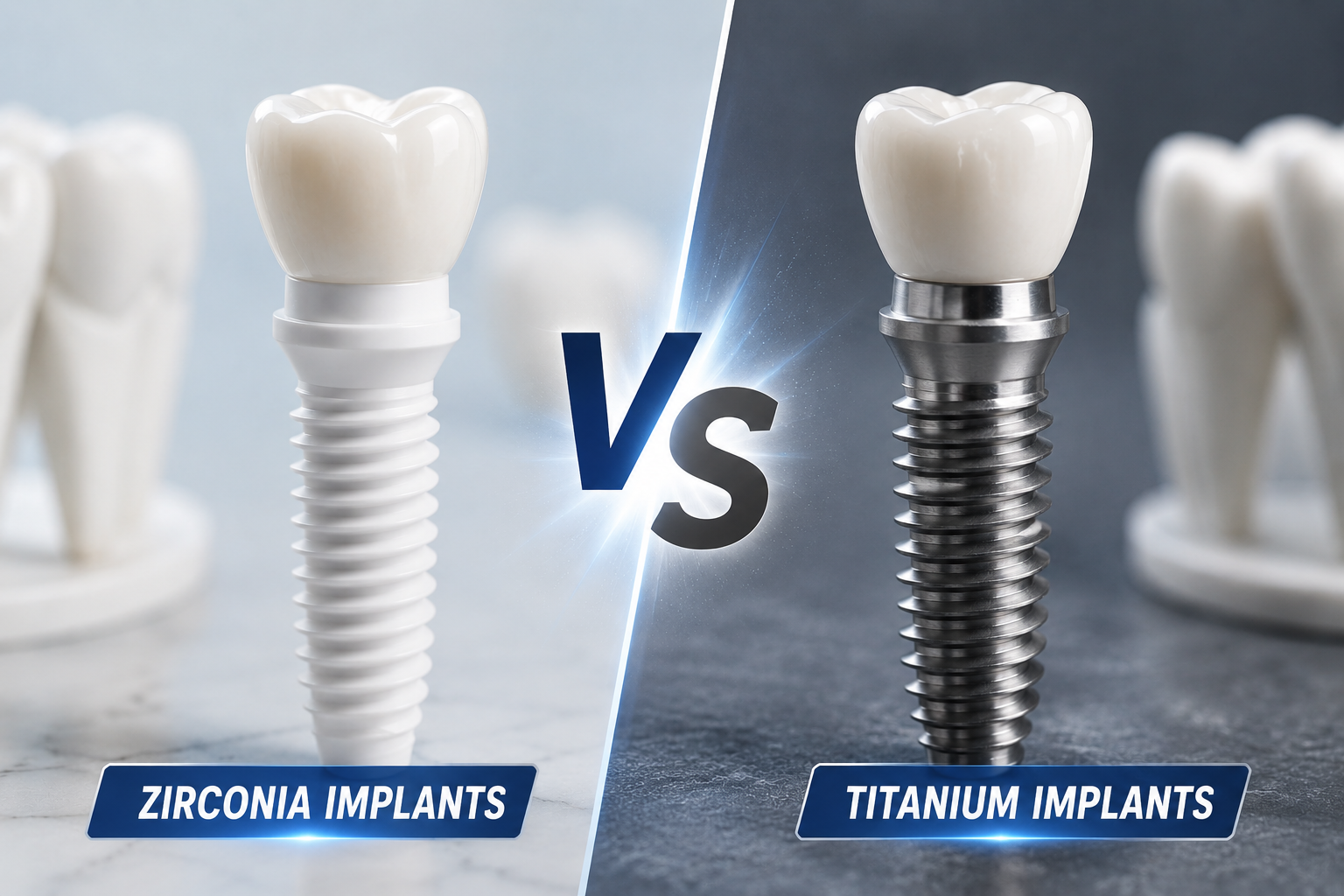
Zirconia (also called ceramic) implants are a more recent innovation gaining momentum in holistic and metal-free dentistry. Made from zirconium dioxide, these implants are entirely metal-free, white in color, and biocompatible.
Why patients choose zirconia:
- Aesthetic advantage: The white color blends naturally with gum tissue, which matters most for patients with thin or receding gum lines
- Metal-free: Ideal for patients with metal sensitivities or those who prefer a biologically “cleaner” implant
- Low plaque affinity: Research suggests zirconia surfaces may accumulate less bacterial biofilm than titanium, potentially benefiting patients prone to gum disease
- One-piece construction in most designs simplifies placement in certain cases
Potential considerations:
- Less long-term data: Zirconia implants have a shorter clinical history compared to titanium; while outcomes are promising, long-term studies spanning 15–20 years are still limited
- One-piece design limitations: Most zirconia implants are one-piece, which can reduce flexibility in angulation adjustments during placement
- More technique-sensitive: Proper placement is critical, requiring a dentist experienced with ceramic implant protocols
- May not suit all cases: Complex bone grafting situations or patients needing significant prosthetic adjustments may be better served by titanium
Zirconia vs Titanium Implants: Side-by-Side Comparison
| Feature | Titanium | Zirconia |
|---|---|---|
| Material | Metal alloy | Ceramic (zirconium dioxide) |
| Color | Gray/silver | White |
| Osseointegration | Extensively documented | Promising; shorter track record |
| Metal-free | No | Yes |
| Design | Two-piece (typically) | One-piece (typically) |
| Aesthetic at gumline | May show metal if gums recede | Blends naturally |
| Clinical history | 50+ years | ~15–20 years |
| Best for | Most patients; complex cases | Metal-sensitive; aesthetic priority |
Which Implant Material Is Right for You?
There’s no universal answer — and you should be cautious of any dental provider who offers one without a thorough evaluation. Your implant recommendation should be based on:
- Bone density and volume: Both materials require adequate bone; titanium offers more flexibility if bone grafting is needed
- Gum tissue characteristics: Thin gum tissue may make aesthetic differences between the two more visible
- Systemic health: Patients with certain autoimmune conditions, metal sensitivities, or specific preferences may lean toward zirconia
- Case complexity: Multi-unit restorations, full-arch cases, or patients needing angled placements often benefit from titanium’s two-piece versatility
- Your personal preferences: Informed patients who prioritize metal-free materials deserve that option — when clinically appropriate
If you’re weighing your options for dental implants in Chandler or Gilbert, a consultation with an experienced implant provider is the clearest path forward.
What the Research Says
The Mayo Clinic notes that dental implants — when properly placed and maintained — have a long-term success rate that makes them one of the most reliable tooth replacement options available. Research published through NIH and PubMed supports titanium’s osseointegration outcomes extensively, while more recent peer-reviewed studies show zirconia implants demonstrating comparable short- to mid-term performance in carefully selected patients.
Neither material is “better” in an absolute sense. Both are clinically valid; the right choice is the one matched to your anatomy, health, and goals.
Why Gilbert and Chandler Patients Choose Riggs Family Dental
At Riggs Family Dental, we take implant consultations seriously. We don’t recommend a material or procedure until we’ve reviewed your dental X-rays, evaluated your bone structure, and had a genuine conversation about what you want from your smile.
Our patients across Gilbert and Chandler trust us to give them straight answers — not oversimplified ones. Whether titanium or zirconia is the right fit, we’ll walk you through the reasoning.
Find our location near you and schedule a no-pressure implant consultation.
Conclusion
The debate between zirconia vs titanium implants doesn’t have a one-size-fits-all answer. Titanium offers an unmatched long-term track record and clinical flexibility. Zirconia provides a metal-free, aesthetically seamless option that suits specific patient profiles well. What matters most is that your decision is made with complete information and guided by a dentist who genuinely evaluates your individual needs.
If you’re ready to explore dental implants in the Gilbert or Chandler, AZ area, the team at Riggs Family Dental is here to help you move forward with confidence.
FAQs
Q1: Is zirconia or titanium better for dental implants?
Neither material is universally superior. Titanium has over 50 years of clinical evidence and offers greater design flexibility, making it suitable for most patients. Zirconia is a strong metal-free alternative best suited to patients with aesthetic concerns or metal sensitivities. The right choice depends on your bone density, gum tissue, health history, and restorative goals.
Q2: Are zirconia implants as strong as titanium?
Zirconia implants have good compressive strength and perform well in low-stress areas, but titanium generally has a higher resistance to fracture under heavy biting forces. For patients with bruxism (teeth grinding) or those needing multi-unit restorations, titanium is often the more conservative choice.
Q3: Who is a good candidate for zirconia dental implants?
Ideal candidates for zirconia implants include patients who prefer metal-free dentistry, those with thin gum tissue where a gray metallic tint might show through, or patients with documented metal sensitivities. Your dentist will assess your bone volume, bite forces, and case complexity before recommending zirconia.
Q4: How long do zirconia implants last compared to titanium?
Titanium implants have data supporting high success rates over 15–25 years. Zirconia implants are showing strong short- to mid-term outcomes (10–15 years) in recent studies, but long-term data comparable to titanium is still being accumulated. Both require proper oral hygiene and regular dental check-ups to maintain longevity.
Q5: Do dental implants hurt?
The implant placement procedure is performed under local anesthesia, so most patients report minimal discomfort during treatment. Post-surgical soreness is normal and typically managed with over-the-counter pain relief. Your provider will give you specific aftercare instructions to support healing and osseointegration.