

It’s 2 a.m. You wake up with a pounding toothache that won’t let you go back to sleep. You don’t know if it’s something you can push through until morning, or if you need to call an emergency dentist in Chandler right now.
That kind of uncertainty is stressful. This guide is here to cut through it. You’ll find out what’s actually happening when a tooth hurts at night, what you can safely do to manage the pain at home, and when it’s time to stop waiting and seek emergency dental care.
Why Toothaches Feel Worse at Night
If you’ve ever noticed that dental pain seems to intensify the moment you lie down, you’re not imagining it.
When you’re horizontal, blood pressure increases around your head and jaw, which can amplify throbbing pain. There’s also less distraction at night — no tasks, no noise — so the brain has nothing to compete with the pain signal.
A few common causes behind nighttime toothaches include:
- Tooth decay that has reached the inner pulp, where nerves live
- Dental abscess — a bacterial infection that builds up pus and pressure inside or around the tooth
- Cracked tooth that flexes under bite pressure and irritates the nerve
- Gum disease leading to exposed roots and heightened sensitivity
- Teeth grinding (bruxism) that wears enamel and stresses the jaw overnight
Some of these are manageable until morning. Others — particularly an abscess — require prompt attention because the infection can spread beyond the tooth.
What You Can Do for Tooth Pain Relief at Home
Before you’re able to see a dentist, there are a few safe, evidence-backed steps you can take to bring the discomfort down:
1. Rinse with warm salt water Mix about half a teaspoon of salt into a glass of warm water and gently swish for 30 seconds. This can help reduce inflammation and clean out any food debris near the painful area.
2. Use over-the-counter pain medication Ibuprofen (Advil, Motrin) is typically more effective for dental pain than acetaminophen because it targets inflammation. Take it as directed on the label. Do not place aspirin directly on the gum or tooth — this can cause a chemical burn to soft tissue.
3. Apply a cold compress Hold an ice pack wrapped in a cloth against your cheek for 15–20 minutes. Cold reduces swelling and numbs the area temporarily. Avoid applying heat, which can make an infection worse.
4. Try clove oil Eugenol, the active compound in clove oil, is a natural analgesic. Dab a small amount on a cotton ball and apply it gently to the affected tooth. It’s a short-term measure, not a fix.
5. Elevate your head while sleeping Keep your head propped up with an extra pillow. This reduces blood pooling near the jaw, which can lessen throbbing.
What NOT to Do When You Have a Toothache
It’s tempting to try everything when you’re in pain, but a few common mistakes can make things worse:
- Don’t put off seeing a dentist if the pain is severe — dental infections don’t resolve on their own and can become medically serious
- Don’t use sharp objects to probe around the tooth or try to dislodge anything
- Don’t use excessive numbing gels on the gum tissue, as overuse can cause irritation
- Don’t rely on home remedies as a substitute for professional treatment — they manage symptoms, not the underlying problem
When a Toothache Is a Dental Emergency
Not every toothache needs a 3 a.m. call, but some situations genuinely can’t wait until your next scheduled appointment.
Seek emergency dental care right away if you experience:
- Swelling in your face, jaw, or neck — this can indicate a spreading abscess that may affect your airway
- Fever alongside tooth pain — a sign that infection has become systemic
- Uncontrollable bleeding from your gums or after a dental injury
- A knocked-out or severely cracked tooth following trauma
- Pus or a bad taste coming from around a tooth
- Sudden, intense pain that no over-the-counter medication is touching
If you’re experiencing any of these, don’t wait. Knowing the signs that require emergency dental services can help you make a faster, more confident decision about when to call.
Understanding Dental Abscesses — The Most Urgent Cause of Nighttime Toothache
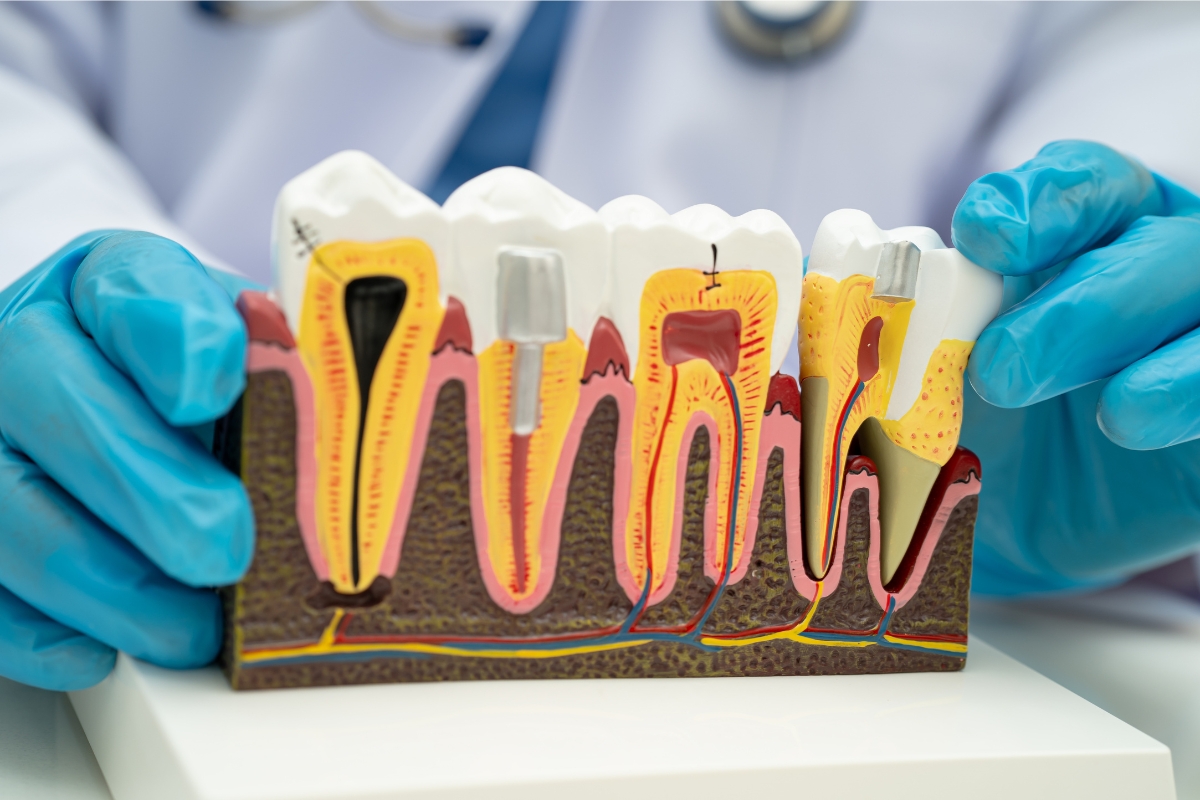
A dental abscess is one of the most common and most serious causes of severe nighttime tooth pain. It occurs when bacteria infect the pulp — the soft tissue inside your tooth containing nerves and blood vessels — or the surrounding gum tissue, forming a pocket of pus.
Symptoms of a tooth abscess include:
- A persistent, throbbing ache that radiates to the jaw, ear, or neck
- Sensitivity to hot and cold that lingers after the stimulus is gone
- Pain when biting or chewing
- Swollen, tender lymph nodes under the jaw
- A pimple-like bump on the gum (called a fistula)
An abscess will not heal without professional treatment. The infection can spread to the jaw, neck, or — in rare but serious cases — into the bloodstream. If you suspect an abscess, this qualifies as a dental emergency.
For a full overview of what constitutes a dental emergency and how to respond, the complete guide to emergency dental care in Chandler covers each scenario in detail.
How Riggs Family Dental Chandler Handles Dental Emergencies in Chandler
Riggs Family Dental Chandler has two locations serving the Chandler and Gilbert area. With over 900 Google reviews, they’ve built a reputation for accessible, patient-focused emergency care.
When you come in for an emergency visit, the team’s first priority is pain relief and an accurate diagnosis. Depending on what’s causing your toothache, treatment may include:
- Root canal therapy — to remove infected pulp and save the natural tooth
- Dental abscess drainage — to clear the infection and relieve pressure
- Crown repair or replacement — for damaged or lost restorations
- Tooth extraction — only when saving the tooth isn’t possible
The practice’s goal, whenever feasible, is to preserve your natural tooth rather than remove it.
If you’re in pain tonight or woke up with a toothache you can’t manage, contact the emergency dentist at Riggs Family Dental in Chandler to get on the schedule as quickly as possible.
When to Go to the Emergency Room Instead
Most dental emergencies are best handled by a dentist — emergency rooms typically don’t have the equipment or training to treat the tooth itself. However, go to the ER immediately if you notice:
- Significant swelling that is closing your eye or pushing into your throat
- Difficulty breathing or swallowing
- High fever with facial swelling
- Uncontrolled bleeding that won’t stop with pressure
These symptoms may indicate that a dental infection has spread to a level requiring hospital-level care.
Conclusion
A toothache at night is your body’s way of signaling that something is wrong. While the tips in this guide can help you manage the pain until you’re able to see a provider, they’re not a substitute for a professional evaluation. Severe pain, swelling, fever, or signs of infection mean you need an emergency dentist in Chandler sooner rather than later.
Riggs Family Dental Chandler is here for exactly these moments. Don’t let dental pain run your night — or your week.
FAQs
Q1: What can I take for a toothache at night?
Ibuprofen (like Advil or Motrin) is typically the most effective over-the-counter option for tooth pain because it reduces inflammation. Take it as directed. You can also apply a small amount of clove oil to the affected area for temporary relief and use a cold compress on your cheek to reduce swelling. These are short-term measures — see a dentist as soon as possible to treat the underlying cause.
Q2: Should I go to the emergency room for a toothache?
In most cases, an emergency dentist is the better option — ERs generally can’t treat the tooth itself and will only prescribe pain medication or antibiotics. However, go to the ER immediately if you have swelling that is affecting your breathing or swallowing, a high fever alongside tooth pain, or bleeding you cannot control. These may indicate a spreading infection that requires hospital care.
Q3: How do I know if my toothache is an abscess?
A dental abscess typically causes persistent, throbbing pain that may radiate to your jaw or ear. Other signs include swelling in the gum or face, sensitivity to hot and cold that lingers, a bad taste in your mouth, or a visible bump on the gum near the painful tooth. If you have these symptoms along with a fever, seek emergency dental care right away.
Q4: Can a toothache go away on its own?
Minor tooth sensitivity or irritation can sometimes resolve with improved oral hygiene. However, a toothache caused by decay, an infection, or a cracked tooth will not heal without professional treatment. Leaving it untreated typically makes the problem worse and more costly to fix. If the pain is significant or has lasted more than a day or two, contact a dentist.
Q5: Does Riggs Family Dental see emergency dental patients in Chandler?
Yes. Riggs Family Dental Chandler offers emergency dental services at their Chandler location on Riggs Road. They treat conditions including severe toothaches, dental abscesses, cracked or knocked-out teeth, and damaged crowns. If you’re experiencing a dental emergency, contact their office directly to be seen as quickly as possible.