
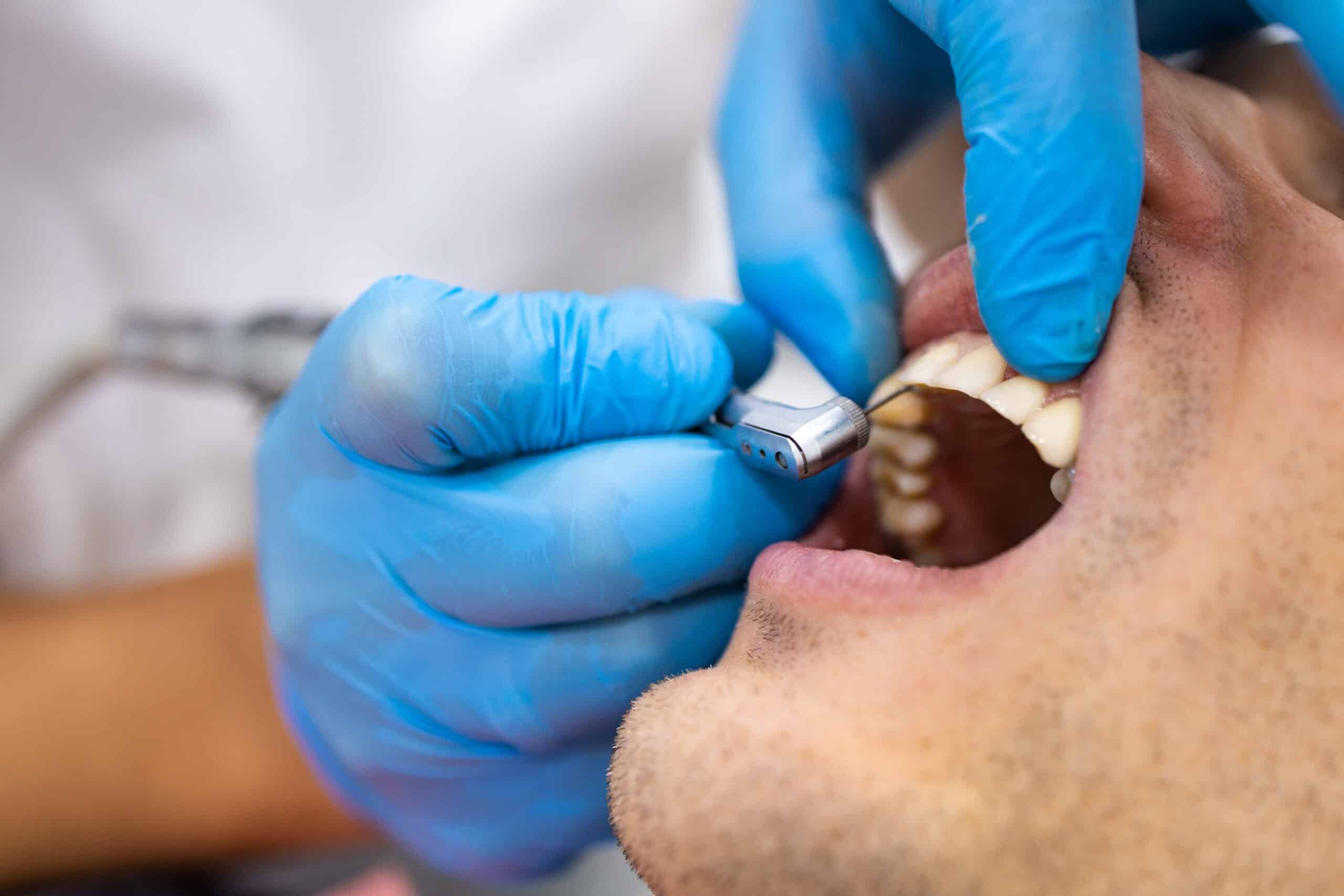
Dentist in white coat examining patient in dental chair at Riggs Family Dental office

What Happens If You Don’t Replace a Missing Tooth?

Image
By Riggs Family Dental

Losing a tooth doesn’t just leave a gap in your smile. Once a tooth is gone, the surrounding teeth, gum tissue, and jawbone all begin responding to the change — and not in ways that improve over time on their own. Here’s what actually happens in your mouth when a missing tooth is left unaddressed, and why dentists in Gilbert, AZ, recommend replacing it sooner rather than later.

Neighboring Teeth Begin to Shift

Teeth are held in position partly by the presence of the teeth next to them. When one tooth is missing, there’s nothing stopping the adjacent teeth from gradually drifting into the open space. Over time, this shifting can throw off your bite alignment, making chewing less efficient and creating new gaps or overlaps elsewhere in your smile. This process is often the root cause behind bite-related pain, such as jaw discomfort or headaches, in patients who thought they were only dealing with a single missing tooth.

The Opposing Tooth Can Over-Erupt

It’s not only the teeth beside the gap that move. The tooth directly across from the missing one — in the opposite jaw — no longer has anything to bite against. Without that resistance, it can gradually shift downward or upward out of its socket, a process called over-eruption. This can eventually interfere with your bite and, in some cases, make future tooth replacement more complicated because the space no longer has the correct dimensions for a new tooth.

Jawbone Loss Begins Almost Immediately

Your jawbone stays dense and strong because the roots of your teeth stimulate it every time you bite and chew. Once a tooth is extracted or lost, that stimulation stops in that specific area, and the bone begins to resorb, or shrink, because the body no longer sees a reason to maintain that density. This bone loss is progressive — it continues the longer the tooth stays missing, and it doesn’t reverse without intervention like a dental implant, which recreates the pressure a natural tooth root would provide.

Facial Structure Can Be Affected

Because jawbone density supports the surrounding facial tissue, ongoing bone loss from multiple missing teeth can eventually change the shape of your face, leading to a sunken or aged appearance around the mouth and jaw. This is one of the reasons dentists emphasize replacing missing teeth as a health issue, not solely a cosmetic one.

Chewing and Speech Are Affected

A missing tooth changes how you bite and chew, especially if it’s a molar or premolar that once handled a large share of your chewing load. Many patients unconsciously shift chewing to the opposite side of the mouth to avoid the gap, which places uneven pressure on the remaining teeth over time. Missing front teeth can also affect speech, since certain sounds rely on the tongue and teeth working together in specific positions.

Increased Risk of Gum Disease and Decay

The gap left by a missing tooth is harder to keep clean, and shifted or over-erupted teeth create new pockets and angles where food and plaque can accumulate. This raises the risk of gum disease and decay in the teeth surrounding the space, which can put additional healthy teeth at risk if the situation isn’t addressed.

It Doesn’t Get Easier to Fix Over Time

One of the most overlooked consequences of delaying tooth replacement is that treatment often gets more complex the longer you wait. As surrounding teeth shift and the jawbone loses density, some patients who could have qualified for a straightforward implant earlier may need a bone graft first, or may find that a bridge no longer fits the space correctly. Addressing a missing tooth soon after it’s lost generally preserves more options.

What Replacing the Tooth Actually Restores

Replacing a missing tooth isn’t just about filling a visible gap — it addresses each of the issues above. A properly placed replacement restores chewing function, prevents neighboring teeth from drifting, and in the case of a dental implant, replaces the root structure that was stimulating the jawbone, which helps prevent further bone loss in that area.

Replacement Options at Riggs Family Dental Gilbert

At Riggs Family Dental Gilbert, tooth replacement options are matched to the extent of tooth loss and the condition of your remaining teeth and jawbone:

  • Fixed Bridges — Supported by the healthy teeth on either side of the gap, or by dental implants, using crowns anchored to a false tooth suspended between them.
  • All-on-4 and Implant-Supported Dentures — A full arch of teeth secured by as few as four dental implants, sometimes completed in a single day for qualifying patients. Implants can also stabilize a removable denture for added comfort and stability.
  • Removable Dentures — A cost-effective, non-surgical option for patients with more extensive tooth loss or who aren’t candidates for implants or bridges.

Which option is right for you depends on how much bone density remains, the health of your neighboring teeth, and your overall goals. If your remaining teeth aren’t strong enough to support a bridge, your dentist will walk you through the alternatives during your consultation.

Don’t Wait to Address a Missing Tooth

The longer a missing tooth is left untreated, the more it can affect your bite, your jawbone, and your remaining teeth. If you’re missing one or more teeth, Riggs Family Dental Gilbert at 2487 S Gilbert Rd #105, Gilbert, AZ 85295, can evaluate your situation and recommend the most effective replacement option for your needs. Call (480) 916-9548 to schedule a consultation.

FAQ

1. What happens if I don’t replace a missing tooth?
A missing tooth can cause neighboring teeth to shift, the opposing tooth to over-erupt, jawbone loss, changes in your bite, and an increased risk of gum disease and tooth decay. Treatment also becomes more complex the longer you wait.

2. How soon does jawbone loss start after losing a tooth?
Jawbone loss begins soon after a tooth is lost because the bone no longer receives stimulation from the tooth root during chewing. Without treatment, the bone continues to shrink over time.

3. Can a missing tooth affect my other teeth?
Yes. Adjacent teeth can drift into the empty space, and the opposing tooth may move out of position. These changes can lead to bite problems, uneven wear, and make future tooth replacement more difficult.

4. What are the options for replacing a missing tooth?
Common replacement options include dental bridges, dental implants, implant-supported dentures (including All-on-4), and removable dentures. The best choice depends on your oral health, bone density, and the number of missing teeth.

5. Why is it better to replace a missing tooth sooner rather than later?
Early replacement helps preserve jawbone, prevents surrounding teeth from shifting, maintains proper chewing function, and often allows for simpler treatment with more replacement options.
New Patients & Emergency Appointments Welcome